


 EN
EN Print  |
|


The Scientific board
The work achieved by the Sorosoro Program could not be carried out without the collaboration of field researchers. We have thus established a Scientific board, comprised of first rate linguists and anthropologists. They help and advise us by proposing projects, evaluating the ones otherwise submitted to us, sourcing resource persons to complete our data etc… This program could not exist without them. We are grateful for their availability and support.
Peter K. Austin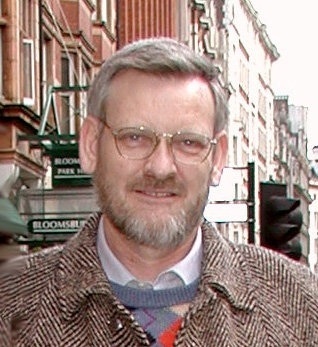
Peter K. Austin is Märit Rausing Chair in Field Linguistics and Director of the Endangered Languages Academic Programme. He joined SOAS in January 2003 after having held a Humboldt Prize at Johann Wolfgang Goethe University, Frankfurt. He was previously Foundation Professor of Linguistics at the University of Melbourne (1996-2002) and has held visiting appointments at Max Planck Institute for Psycholinguistics Nijmegen, Tokyo University of Foreign Studies, University of Hong Kong, and Stanford University. He studied at the Australian National University, completing a BA with first class Honours in Asian Studies (Japanese and Linguistics) in 1974, and a PhD in 1978 on the Diyari language spoken in the far north of South Australia. He taught at the University of Western Australia (1978), held a Harkness Fellowship for post-doctoral research at UCLA and MIT (1979-80), and in 1981 set up the Department of Linguistics at La Trobe University.
Professor Austin’s research interests cover descriptive, theoretical and applied linguistics and include theory and practice of language documentation, language typology, theoretical syntax, Lexical Functional Grammar, computer-aided linguistic analysis and lexicography. He has extensive fieldwork experience on Australian Aboriginal languages, and Sasak and Samawa, Austronesian languages spoken on Lombok and Sumbawa islands, eastern Indonesia. He has published 21 books, 7 bilingual dictionaries and over 70 articles, and has co-authored with David Nathan the first fully page-formatted hypertext dictionary on the World Wide Web, a bilingual dictionary of Gamilaraay (Kamilaroi), northern New South Wales (1995).
Recently, Professor Austin has been working with native-speaker scholar Eli Timan on documenting the Jewish Iraqi language, and with Dr Sabah Aldihisi on neo-Aramaic ritual language used by the Mandean community of Syria, Iraq and Iran.
 Barbara Glowczewski
Barbara Glowczewski (Dr and Pr) is a Professorial Researcher at CNRS since 1988 and a member of the the Laboratoire d’Anthropologie Sociale (Social Anthropology Laboratory, Paris) since 1991.
As an anthropologist who specializes in issues relating to Australian Aborigines, she has conducted regular field research with the Warlpiri in the central desert (since 1979), the Yawuru and their neighbors in Kimberley (1991-2004), as well as the people of Palm Island.
Since 2013, she has been studying cults of African matrix comparing the processes of updating and virtualizing heterogeneities in the incorporation of the orixas and spirits in Brazil, in relation to totemic becomings in Australia.
She is the author of several books (including Rêves en colère; Guerrriers pour la Paix, The Challenge of Indigenous Peoples, and Totemic Becomings) and numerous articles on the reticular thought (myths, rituals, art, dreamlike creation) and social, cultural and political rights of Australian Aborigines.
She is also the author of audiovisual productions (Dream trackers, CD-ROM, Quest in Aboriginal Land, interactive DVD, Spirit of Anchor, 53′ documentary).
She is a member of the International Advisory Board of the Cairns Institute at James Cook University where she is adjunct Professor.
She is also a member of several editorial boards (Australian Aboriginal Studies, Anthrovision, Deleuze Studies, Mondes contemporains, Multitudes, Vibrant ABA), as well as a board member of several organizations promoting research and the populations being studied (Sorosoro, Decryptimages, Archives Audiovisuelles de la Recherche, Survival International France).
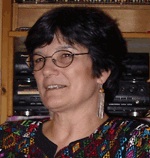 Colette Grinevald
Linguist, Senior Member of the Institut Universitaire de France (University Institute of France), Colette Grinevald was born in Algiers in 1947. She earned a Master’s degree in Spanish (1969) at the Paris X -Nanterre University, and then a Ph.D. in Linguistics (1975) at Harvard University. Professor at the University of Oregon from 1974 to 1995, she came back to France in 1995 as a professor-researcher in the Language Sciences department and in the Laboratory CNRS (National Center of Scientific Investigation) for the Dynamic of the Language at the Lumière Lyon 2 University.
Her research interest covers the Indigenous American languages. She wrote two books on Central American Indigenous languages: The Structure of Jacaltec in 1977, on a Mayan language from Guatemala and A Reference Grammar of the Rama (Chibchan) language in 1989 on a Chibcha language of Nicaragua. She coordinated for the Bolivian government a campaign of standardization of the Amazonian languages’ alphabets in 1995 and 1996, and she participated to the forming of linguists on the field in the United-States, in France, in Germany and also in Mexico, in Colombia, in Ecuador, in Brazil and in Argentina. She has held visiting appointments and lectures around the world (United-States, Latin America, Europe and Japan) and has written numerous articles.
For more than twenty years Colette Grinevald has been concerned about the endangered languages’ situation, and she has participated in the creation of foundations for their documentation. She is a member of the experts’ team that defined, in 2003, the vitality criteria of the languages for UNESCO.
From 1982 to 1992, she was the president of CHRLA (Council for Human Rights in Latin America), an NGO that works in favour of Human Rights. In 1990 she was the president of the SSILA (Society for the Study of Indigenous Languages of America). She is a member of the board of an NGO that dedicates to the sustainable development in Nicaragua: blueEnergy-International and blueEnergy-France.
She is currently a member of the Scientific Council of the Sorosoro Programme at the Fondation Chirac in Paris.
Michel Laun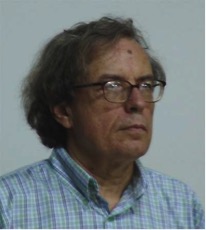 ey
ey
Michel Launey is Professor of Linguistics Emeritus at the Paris VII University and an Emeritus Director of research at the IRD of Guiana. After having studied Nahautl (the language of the Aztec people of Mexico), he dedicated himself to the study of the Palikur language in Guiana, and to the problems linked to the fact of speaking French for the non-French-speaking students of Guiana. He participated in the initial (IUFM) and permanent (DAFOR) training of teachers in order to help them to understand the difficulties that non-French-speaking students faced in learning French.
He has also participated to the ILM’s forming (the speakers in mother tongue who were previously called Bilingual Mediators) in the schools of Guiana.
He wrote a thesis on Nahuatl, and the following works:
– Introduction à la langue et à la littérature aztèques; T. I (Grammaire), T. II (Littérature), Paris, L’Harmattan, 1980. (Introduction to Aztec language and literature);
– Une grammaire omniprédicative, Paris, CNRS (Coll. “Sciences du Langage”), 1994. (An omnipredicative grammar)
– Awna parikwaki : introduction à la langue palikur de Guyane et de l’Amapa, IRD-Editions, Paris, 2003. (Awna parikwaki : introduction to the Palikur language of Guiana and to Amapa)
He also wrote about forty articles on Nahuatl, Palikur, problems relating to regional languages, bilingualism at school, and the pedagogy of teachers in a non-French-speaking context.
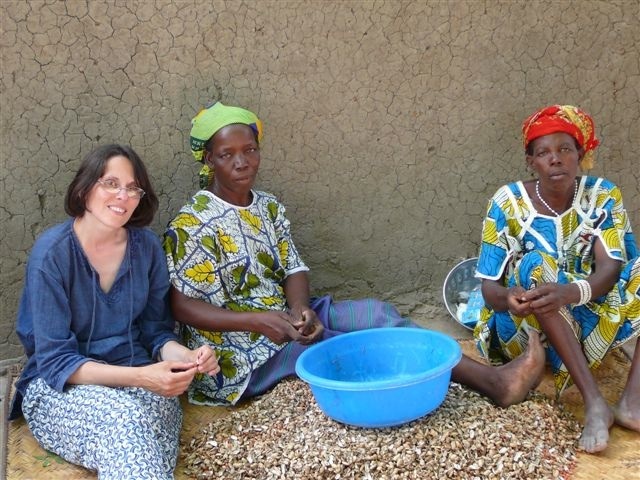 Cécile Leguy
Cécile Leguy (born in1967), Lecturer, PhD, Paris Descartes University – L.M.S. (UMR 8099 in CNRS)
After a MA in philosophy defended at the University Paris IV-Sorbonne, Cécile Leguy turned to social anthropology and ethnolinguistic to prepare, at the School of High Studies in Social Sciences, a thesis of ethnology devoted to proverbial speech in the African rural environment, relying on long field experiences at Bwa’s place in Mali (1996). Appointed lecturer in ethnology at the University Victor-Segalen Bordeaux 2 in February 1999, and then at the University Paris Descartes in September 2006, she mainly devoted her teaching to general anthropology, ethnolinguistic, oral literature and to African society anthropology.
The whole of her research aims at exploring the recourse to the implicit in communication, according to an ethno linguistic and pragmatic approach. She firstly worked on proverb, not understood as a type of oral literature but as a discourse act instead, which as to be understood and studied in a situation of enunciation. The resort to proverb, omnipresent in the context which she leads her ethnographic enquiries in (Mali and Burkina Faso), takes her to explore discursive strategies related to social stakes they may reveal. Other fields of orality held her attention, like tale – which is facing a renewal thanks to development of local radios – or sing some NGOs resort to in order to promote their actions and to make their messages heard better. Nowadays, her research is oriented toward persons’ nomination and use of names in communication processes, after having defended her HDR (Authorization to direct researches) at Paris Descartes University in December 2008.
Member of Cahiers de Littérature Orale editorial board, Cécile Leguy has notably published Le proverbe chez les Bwa du Mali. Parole africaine en situation dénonciation, Paris, Karthala (2001), Paroles imagées. Le proverbe au croisement des cultures (in collaboration with Diarra Pierre), Rosny-Sous-Bois, Bréal (2004) and directed, in collaboration with Micheline Lebarbier, Des noms et des personnes, Cahiers de Littérature Orale, n°59/60 (2006) and, in collaboration with Brunhilde Biebuyck and Sandra Bornand, Pratiques d’enquête, Cahiers de Littérature Orale n°63/64 (2009).
 Claire Moyse-Faurie
Claire Moyse-Faurie is Director of Research at LACITO, a CNRS laboratory (France).
The entirety of her research is based on data collected during fifteen field missions conducted since 1976 in New Caledonia and Wallis and Futuna.
This field research work has led to books on Kanak and Polynesian languages: dictionaries, syntactic analysis of languages of New Caledonia such as Drehu, Xârâcùù, Xârâgurè, Hamea, as well as Wallisian and Futunan. It has also resulted in a number of articles dealing with syntax in areas such as lexical categorization and nominalization, actancial structures, expression of the reflective and the mutual, or the grammaticalization of verbs of motion and expressions of trajectory.
Claire Moyse-Faurie is also very involved in the documentation and revitalization of endangered languages. She contributes to several databases (Pangloss, PARADISEC, Corpus de la Parole) through her recordings, transcription and translation of oral tradition texts.
She taught at the University of New Caledonia (February 2013 – January 2015) in the Department of Oceanian Cultures and Languages, and she acts as advisor to several Master and PhD students.
Her complete bibliography is available (in French) on the website of her laboratory:
http://lacito.vjf.cnrs.fr/membres/moyse.htm
Stéphane Robert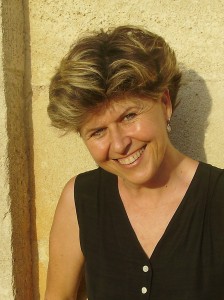
Stéphane Robert is a linguist, and the Director of investigation in the ‘Language, Languages and Cultures of Black Africa’ Laboratory of the CNRS (National Center of Scientific Investigation in France).
Her research interests mainly cover the different aspects of wolof’s workbook, but also Atlantic languages and the safeguard of Senegal’s languages, typology, and cognitive linguistics.
Furthermore, she is the Director of the ‘Typology and Linguistic Universals’ Federation of the CNRS.
Besides many articles, she published the book Approche énonciative du système verbal: le cas du wolof (1991, Editions of the CNRS) (Statement approach of the verbal system: the case of wolof) and published or co-published several works including Space in languages: linguistic systems and cognitive categories (2006, John Benjamins).